Mapping the Digital Landscape: Understanding Cyberbullying Sources
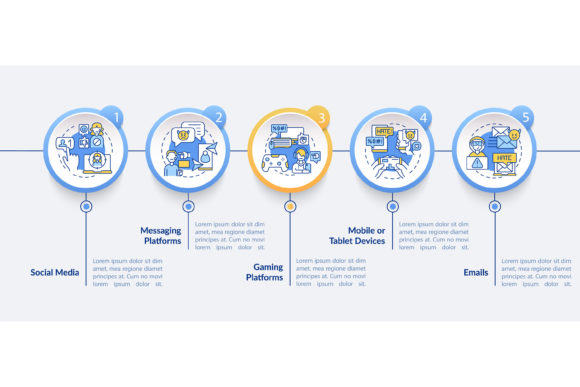
In our interconnected world, digital platforms offer incredible opportunities for connection, learning, and entertainment. Yet, the same spaces that foster community can also become venues for harm. Cyberbullying, the use of electronic communication to bully a person, typically by sending messages of an intimidating or threatening nature, is a pervasive issue. To combat it effectively, we must first understand its origins. This article explores the primary sources of cyberbullying, visualized through a common infographic template that highlights messaging apps, gaming platforms, and social media, providing a clear roadmap of where and how these behaviors manifest.
The Purpose of Visualizing Cyberbullying Sources
Why create an infographic about cyberbullying sources? The purpose is clarity and awareness. A cyberbullying sources vector infographic transforms complex, scattered data into an accessible visual story. For parents, educators, and even young users themselves, a simple chart or workflow layout can illuminate risks that might otherwise remain abstract. By using presentation design elements like linear icons and process timelines, such visuals cut through the noise, directing attention to the key channels where harmful interactions occur. This is not about fostering fear of technology, but about promoting informed and respectful use.
The Core Platforms: A Breakdown of Primary Sources
The typical infographic categorizes sources into distinct, yet often overlapping, areas. Understanding these helps in developing targeted prevention strategies.
- Messaging Applications: Private and group chats on apps like WhatsApp, Snapchat, or Discord can become closed environments for bullying. The perceived privacy and ephemeral nature of some messages (like "disappearing" texts) can encourage aggressive behavior, exclusion, or the spreading of rumors without immediate accountability.
- Social Media Networks: Public and semi-public platforms such as Instagram, TikTok, Facebook, and Twitter (X) are common arenas. Here, bullying can take the form of hurtful comments, public shaming, sharing altered images, or creating fake profiles to harass someone—actions amplified by the potential for vast audience reach.
- Online Gaming Platforms: Multiplayer gaming spaces and voice chat services (e.g., in Xbox Live, PlayStation Network, or game-specific chats) are significant sources. The competitive and often anonymous environment can lead to toxic trash-talking, harassment via voice or text, and targeted exclusion from team activities, sometimes called "griefing."
- Forums and Comment Sections: Websites, blogs, and video platforms with public comment sections can host persistent, anonymous bullying campaigns where harmful remarks are posted repeatedly.
- Email: While perhaps considered a more "traditional" digital source, email remains a tool for sending threatening messages, malicious rumors, or unwanted bulk harassment directly to a person's private inbox.
The Significance in Modern Daily Life
Cyberbullying is not a niche issue; it fits deeply into modern life, affecting mental health, education, and social development. For young people, whose social lives are increasingly mediated through gaming platforms and messaging apps, these digital sources are as real as the school playground. The impact can be severe: anxiety, depression, withdrawal from online and offline activities, and declines in academic performance. For adults, cyberbullying can extend into professional life on platforms like LinkedIn or via work email, affecting job performance and well-being. Recognizing the specific sources is the first step in creating safer digital ecosystems in schools, workplaces, and homes.
A 5-Step Process for Understanding and Response
A helpful data visualization with 5 steps or a process timeline chart can guide individuals through a logical response path. Here is a workflow layout adapted from common infographic templates:
- Identify the Source: Pinpoint exactly which platform or application is being used for the harmful behavior (e.g., is it a TikTok comment, a Discord DM, or in-game chat?).
- Document the Evidence: Take screenshots, save messages, or record instances. Most platforms require evidence for reporting. This step creates a crucial record.
- Utilize Platform Tools: Use the built-in safety features. Block the bully, report the content or account through the platform’s official channels, and mute or leave harmful groups.
- Seek Support: Reach out to a trusted person—a parent, teacher, friend, or workplace supervisor. For severe cases, contact mental health professionals or legal authorities.
- Evaluate and Adjust Digital Habits: Reflect on privacy settings, friend/list connections, and time spent on problematic platforms. Proactive management of one’s digital presence can reduce risk.
Clarifying Common Misunderstandings
Several assumptions about cyberbullying sources need clarification. First, it’s a misconception that bullying is only on "social media." As the infographic shows, gaming platforms are a major vector, often overlooked by adults unfamiliar with those environments. Second, the idea that "it’s just words online" minimizes the real psychological harm caused by persistent harassment across these channels. Third, there’s an assumption that anonymity is the main driver; however, bullying frequently occurs between known acquaintances, using the digital source’s features to amplify the attack. The visual template helps dispel these myths by showing the diversity and interconnectedness of the sources.
The Role of Design Elements in Communication
The workflow layout with linear icons, common in these infographic templates, serves a vital educational purpose. Simple icons for a messaging bubble, a game controller, or a social media logo instantly communicate the source category without lengthy text. A process timeline chart provides a sense of order and actionable steps, combating the feeling of chaos that victims often experience. These design choices make the information digestible for a broad audience, from beginners to those more experienced with digital safety topics, fulfilling the Helpful Content principle by prioritizing user understanding.
Building a Broader Understanding of Digital Citizenship
Ultimately, analyzing cyberbullying sources through an infographic isn't just about risk avoidance. It’s a gateway to building a broader understanding of responsible digital citizenship. Each source—whether a messaging app, a gaming platform, or a social network—is a community with its own norms and tools. Learning where bullying happens teaches us where kindness and respect must be actively applied. It encourages users to not only be reactive but proactive: to set positive examples in group chats, to report not just for themselves but for others, and to choose games and forums that foster healthy interaction.
For parents and educators, these visuals become conversation starters. They can map onto discussions about specific apps their children use. In business, understanding these sources informs better harassment policies for workplace communication tools. The availability of such infographics in multiple file types like JPG, EPS, PNG, SVG, AI means they can be easily adapted for school posters, website articles, or community workshop presentations, maximizing their practical relevance.
Moving Forward with Awareness
As digital landscapes evolve, new platforms and features will emerge. The fundamental framework provided by a cyberbullying sources vector infographic, however, remains essential. It teaches us to look critically at the tools we use for connection and fun, to recognize their potential for harm, and to empower ourselves with the knowledge to navigate them safely. By starting with a clear map of the sources, we take the first and most crucial step toward fostering digital environments where everyone can participate without fear.