The Practical Workflow Integration of a 3D Rendering Mushroom Character
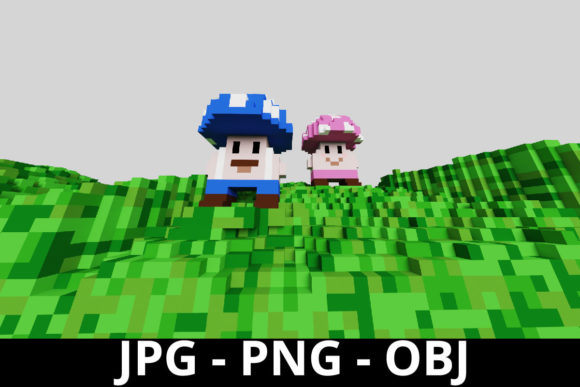
The creation and use of a 3D rendering mushroom character, particularly in a voxel art style, represents a specific asset within the broader pipeline of digital content creation. It is not merely a final image but a packaged digital product, often delivered as a collection of files in a ZIP folder containing JPG previews, PNG textures, OBJ models, and more. For professionals and creators, this asset serves as a versatile component that can be integrated into various stages of a project, from initial conceptualization to final implementation in game design, marketing materials, or educational content.
Understanding the Asset Package and Its Role
A 3D rendering mushroom character crafted as voxel art—evoking a nostalgic 8-bit, pixelated, retro aesthetic—is typically a resolved asset. This means the core creative work of modeling, texturing, and rendering is complete. The provided files (JPG, PNG, OBJ) are the deliverables. The JPGs often serve as high-quality rendered illustrations for immediate use in presentations, websites, or promotional art. The PNG files, with transparency, are crucial for compositing the character into other scenes or graphics without a background. The OBJ file is the 3D model itself, a versatile format compatible with most 3D software and game engines, allowing for further modification, animation, or integration into a real-time environment.
This package fits into a workflow as a time-saving foundational asset. Instead of starting from a blank canvas, a creator, whether a game developer, a marketer designing a mascot, or an educator building interactive content, begins with a polished, ready-to-use character. The workflow integration begins at the planning stage. When scoping a project that requires a cute, cartoon, or fun character—especially one with gaming or retro connotations—identifying and procuring such an asset early can define the visual direction and accelerate production timelines.
Integration into Game Design and Development
For game designers and indie developers, this asset is particularly potent. The voxel art style aligns perfectly with genres emphasizing pixel art, old-school charm, or minimalist 3D aesthetics. The workflow integration is direct. Upon acquiring the ZIP folder, the developer can immediately use the JPG renderings for concept art and pitch documents. The PNG files might be used for placeholder UI elements or promotional material during development.
The crucial step is importing the OBJ file into the game engine, such as Unity or Unreal Engine. This is a practical, process-oriented task. Preparation involves ensuring the engine supports the OBJ format (most do) and planning the texture mapping. The provided textures, likely included as PNGs, need to be applied within the engine. The character can then be placed within a scene—perhaps on grass or in an isolated box for testing. This allows for rapid prototyping. The developer can assess scale, aesthetic fit, and performance before committing to custom animation or further model modification. This asset acts as a functional prototype and, if the style is perfect, a final game asset. It interacts directly with other development tools: the engine, animation software, and level editors.
Pre-Production and Conceptualization Uses
Before a single line of code is written, the 3D rendering mushroom character serves a vital role in pre-production. For entrepreneurs or small business owners creating a game, the super, famous, or mascot-like qualities of such a character can help solidify brand identity. The high-quality renders (JPG) are perfect for creating mood boards, style guides, and investor presentations. They provide a concrete visual anchor that teams and stakeholders can reference, ensuring consistency in the project's artistic direction from the outset.
Furthermore, for bloggers, publishers, and marketers in the gaming space, this asset can be used to generate content quickly. An article about retro game design trends, for instance, can be illustrated compellingly with this ready-made, professional 3D render. The workflow here is about content velocity. Instead of commissioning custom art or spending hours creating something from scratch, the integrated use of this pre-rendered asset allows for fast, high-quality visual support for written content.
Practical Implementation in Marketing and Branding
Beyond game development, the cute, isolated, and digital nature of a 3D mushroom character makes it an excellent candidate for branding and marketing workflows. A freelancer or small business owner might use it as a central avatar for a channel, product, or service related to gaming, fun, or creativity. The implementation process involves selecting the most appropriate file from the package.
For a social media avatar, a clean PNG on a transparent background is ideal. For a website hero image, a high-resolution JPG rendering of the character in a scene might be used. For more interactive or innovative marketing, the 3D OBJ file could be integrated into a WebGL experience on a website, allowing users to view the character in 3D. This requires a different skill set and interaction with web development tools, but the starting asset is the same. The key to smooth integration is file organization and compatibility checking. Understanding the specifications of your platform (e.g., file size limits for avatars, supported 3D formats for web) before deployment ensures efficiency and avoids last-minute adjustments.
Long-Term Asset Management and Adaptation
A professional approach to using such an asset involves considering its long-term role in your resource library. After use in one project, the 3D rendering mushroom character should be archived systematically alongside its license information. For creators who work across multiple projects, this builds a reusable asset library that increases future efficiency. The OBJ file, being a standard 3D format, offers ongoing utility. If a future project requires a similar style but a different color, the original model can be re-textured using the PNGs as a base or new textures created. This adaptability is a core value of such packaged assets.
Quality control in integration is also crucial. When placing the rendered character into a new scene or composition, pay attention to lighting consistency and resolution matching. A high-quality render dropped into a low-resolution composite will look out of place. The workflow tip here is to always use the highest quality source file appropriate for your final output medium and then downsample as needed, rather than starting with a compressed preview image.
Enhancing Creative and Educational Projects
For educators, hobbyists, and artists, this asset can be a tool for learning and creative exploration. The process of unpacking the ZIP, examining the different file types (JPG, PNG, OBJ), and understanding how they relate to one another is a practical lesson in 3D asset creation. A hobbyist might import the OBJ into free software like Blender to learn basic 3D manipulation, animation, or scene building without the initial hurdle of modeling.
In an educational workflow focused on game design or digital art, the asset can serve as a benchmark or example for students. They can analyze the construction of the voxel art, study the rendering techniques that give it a super, illustrative quality, and then attempt to create their own version. This moves the asset from a passive resource to an active teaching tool. Its integration here is about deconstruction and inspiration, interacting with educational methods and software tutorials.
The 3D rendering mushroom character, especially in its complete packaged form, is a multifaceted digital tool. Its integration into professional, creative, or educational workflows is defined by planning, file management, and an understanding of the end platform's requirements. By treating it as a modular component—a design-ready illustration, a compositable graphic, or a malleable 3D model—users can streamline their processes, maintain visual consistency, and achieve high-quality results efficiently. The ultimate goal is not just to use the asset, but to weave it seamlessly into your existing methods, saving time for ideation, iteration, and execution on the more unique aspects of your project.